Natural Products
Natural and Chemical-Free Products
A key part of Nature2Nature's work is the development of products that minimise unnecessary chemicals and preservatives.

Sustainable Production
Creating Natural Products, Rural Livelihoods and Responsible Tourism
Location
Rishikesh and Dimber, near Dehradun Aerocity, Uttarakhand
Domain
Sustainable Production
Project Lead
Himanshu Bahuguna
Primary Focus
Natural food products, chemical-free colours, farming and agro-tourism
Beneficiaries
Local villagers, women and marginalised rural communities
About the Project
Nature2Nature is a sustainable production initiative based in Uttarakhand, working across natural food products, chemical-free festive colours, farming and rural tourism.

The project produces preservative-free jams and chemical-free Holi colours while also developing a hillside farm into an agro-tourism destination and farm stay. Its wider purpose is to demonstrate how agriculture, local production, tourism and rural livelihoods can grow together without disconnecting people from nature.
Led by Himanshu Bahuguna, Nature2Nature works with local villagers, women and communities from socially and economically marginalised backgrounds.
Nature2Nature therefore operates not only as a product initiative but as an emerging rural-development model.
Core Work

Natural Products
A key part of Nature2Nature's work is the development of products that minimise unnecessary chemicals and preservatives.

Sustainable Farming
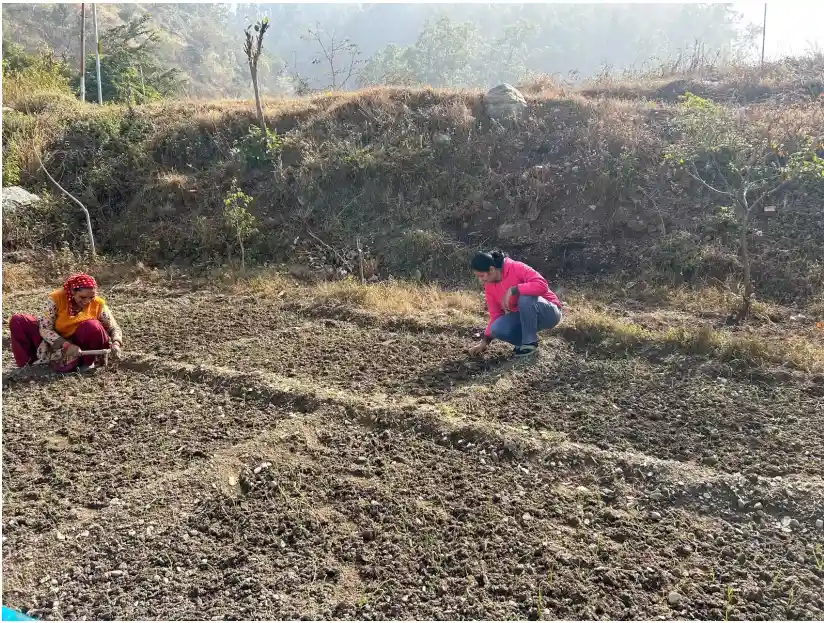
Nature2Nature's work is connected with farming and local resource use. The project is developing agricultural activity on land near Dehradun and Rishikesh, including a one-acre area intended for slow farming.

Agro-Tourism
Nature2Nature plans to develop an agro-tourism destination along the Rishikesh–Dehradun corridor. The concept includes an Agro Café and a farm-based visitor experience.
Environmental and Social Impact
Chemical-free Holi colours can reduce the impact of synthetic materials on skin, soil and water. Natural food processing can encourage better use of local produce and reduce avoidable waste when fruits are converted into value-added products.
₹2.3 lakh
soft loan support from SHAPE Foundation
₹15,000
monthly assistance during the documented period
1 acre
area intended for slow farming
3-4 years
planned farm stay development horizon

SHAPE Foundation Support
SHAPE Foundation has supported Nature2Nature through a soft loan of approximately ₹2.3 lakh and monthly assistance of around ₹15,000 for a documented period of one and a half years beginning in August 2023.
Nature2Nature aligns with SHAPE Foundation's Sustainable Production domain because it connects human needs, rural livelihoods and environmental responsibility.
One of the project's main challenges is marketing and visibility. The next stage will require a clear product identity, stronger communication and access to buyers who value natural production and social impact.
Farm Stay & Slow Tourism
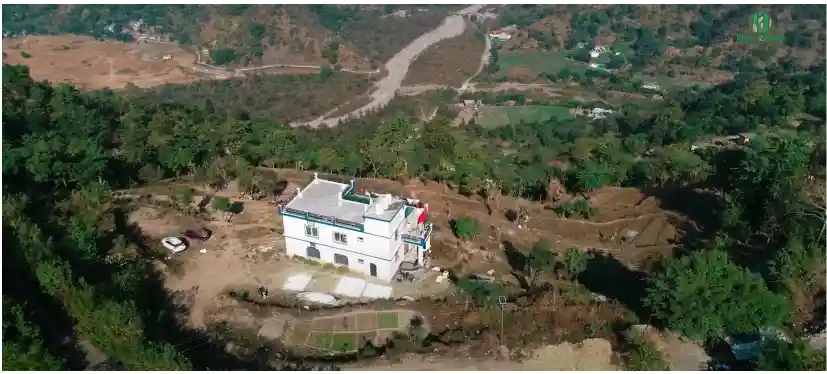
The project also plans to develop a hillside farm into a farm stay over a longer three-to-four-year period.
Slow tourism encourages visitors to spend more time in one place, interact with local communities and understand the landscape rather than moving rapidly between attractions. This approach can be especially relevant in Uttarakhand, where tourism creates both economic opportunity and environmental pressure.
The purpose is not simply to build accommodation in a rural area. The farm stay should allow visitors to understand farming, food, ecology and local life in a meaningful manner. If developed carefully, slow tourism can support livelihoods while reducing some of the pressure associated with high-volume tourism.
Strengthening preservative-free jam production
Developing pickles and chutneys
Expanding natural product lines
Improving packaging and branding
Building stronger market visibility
Developing the Agro Café

Nature2Nature is a sustainable production initiative based in Uttarakhand, working across natural food products, chemical-free festive colours, farming and rural tourism.
The project produces preservative-free jams and chemical-free Holi colours while also developing a hillside farm into an agro-tourism destination and farm stay. Its wider purpose is to demonstrate how agriculture, local production, tourism and rural livelihoods can grow together without disconnecting people from nature.
Led by Himanshu Bahuguna, Nature2Nature works with local villagers, women and communities from socially and economically marginalised backgrounds.
Nature2Nature therefore operates not only as a product initiative but as an emerging rural-development model.
Use natural and locally available resources responsibly
Create livelihood opportunities in rural communities
Reduce dependence on chemical-heavy products
Build stronger connections between consumers and producers
Encourage slower and more conscious forms of travel
Support agriculture as a viable and dignified livelihood
The project has successfully produced jams without artificial preservatives. This work involves careful attention to fruit selection, recipe development, hygiene, processing, storage, packaging, shelf-life management and product consistency.
Fruit selection
Recipe development
Hygiene
Processing
Storage
Packaging
Shelf-life management
Product consistency
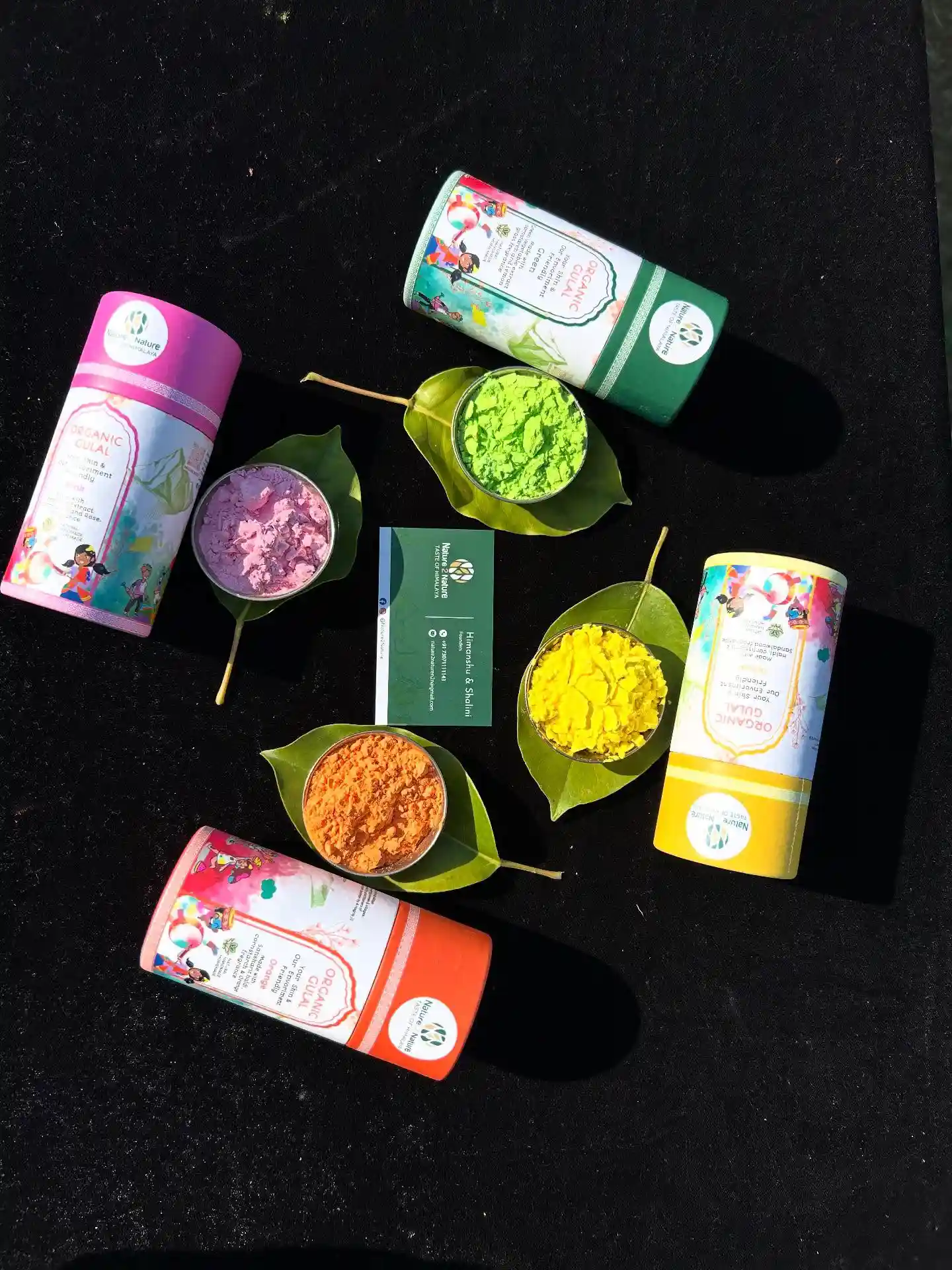
Nature2Nature also produces Holi colours without harmful chemicals. Conventional synthetic colours may contain substances that irritate the skin, affect the eyes or enter soil and water systems after use. By developing more natural alternatives, the project offers consumers a festive product aligned with personal and environmental wellbeing. This product category also provides an opportunity to introduce conscious consumption through a familiar cultural celebration.
Nature2Nature's work is connected with farming and local resource use. The project is developing agricultural activity on land near Dehradun and Rishikesh, including a one-acre area intended for slow farming.
Slow farming places importance on patience, soil health, seasonal cycles and responsible cultivation. It differs from production systems that focus only on maximum short-term output.
Local production also helps retain economic value within the region. When fruits and agricultural ingredients are processed into jams, chutneys, pickles or other products close to where they are grown, communities can gain more than they would from selling raw produce alone.
Natural cultivation
Soil restoration
Local crop varieties
Reduced chemical dependence
Seasonal food production
Direct learning about agriculture
Greater connection between consumers and farms
Nature2Nature seeks to generate livelihood opportunities for local villagers, women and communities from scheduled caste and tribal backgrounds.
Rural livelihood opportunities are often limited by seasonal agriculture, migration and weak market access. Projects that combine farming with food processing and tourism can create more diverse forms of employment.
Women can play an especially important role in food processing, hospitality and local enterprise development. As the project grows, fair participation and transparent livelihood arrangements will remain important.
Farming
Fruit collection
Ingredient preparation
Food processing
Packaging
Product labelling
Farm maintenance
Hospitality
Housekeeping
Cooking
Visitor guidance
Local transport
Craft and cultural experiences
Nature2Nature plans to develop an agro-tourism destination along the Rishikesh–Dehradun corridor. The concept includes an Agro Café and a farm-based visitor experience.
Agro-tourism allows people to spend time in an agricultural environment and understand where food comes from. It can also help rural communities earn income through hospitality, farm experiences and local products.
An Agro Café can create a direct connection between food production and consumption. Visitors can experience ingredients within the landscape where they are grown, rather than seeing food only as a packaged commodity. This model can also give Nature2Nature a physical space to present its jams, colours, pickles, chutneys and other future products.
Farm walks
Seasonal harvesting
Local food experiences
Learning about natural products
Conversations with farmers
Traditional cooking
Rural crafts
Nature-based activities
Educational visits
Purchase of locally produced goods
The project also plans to develop a hillside farm into a farm stay over a longer three-to-four-year period.
Slow tourism encourages visitors to spend more time in one place, interact with local communities and understand the landscape rather than moving rapidly between attractions. This approach can be especially relevant in Uttarakhand, where tourism creates both economic opportunity and environmental pressure.
The purpose is not simply to build accommodation in a rural area. The farm stay should allow visitors to understand farming, food, ecology and local life in a meaningful manner. If developed carefully, slow tourism can support livelihoods while reducing some of the pressure associated with high-volume tourism.
Smaller visitor groups
Longer stays
Local food
Nature-based experiences
Reduced dependence on mass tourism
Respect for local culture
Opportunities for community participation
Environmental learning
Reduced use of harmful chemicals
Natural food production
Responsible farming
Greater awareness of seasonal produce
Local processing
Agro-tourism
Slow tourism
More direct relationships with nature
Rural employment
Women-led livelihood opportunities
Skills in food production
Hospitality-related employment
Income for marginalised communities
Stronger local enterprise
Greater recognition of rural knowledge
Reduced pressure for migration
SHAPE Foundation has supported Nature2Nature through a soft loan of approximately ₹2.3 lakh and monthly assistance of around ₹15,000 for a documented period of one and a half years beginning in August 2023.
Nature2Nature aligns with SHAPE Foundation's Sustainable Production domain because it connects human needs, rural livelihoods and environmental responsibility.
One of the project's main challenges is marketing and visibility. The next stage will require a clear product identity, stronger communication and access to buyers who value natural production and social impact.
Strengthening preservative-free jam production
Developing pickles and chutneys
Expanding natural product lines
Improving packaging and branding
Building stronger market visibility
Developing the Agro Café
Creating the agro-tourism destination
Advancing the hillside farm stay
Expanding slow-farming activities
Training local community members
Building responsible tourism guidelines
Developing distribution partnerships
FAQ
Contact Us
Consumers, retailers, hospitality partners, tourism professionals, agricultural experts and supporters interested in natural products and responsible rural development can connect through SHAPE Foundation.
Rishikesh and Dimber,
near Dehradun Aerocity,
Uttarakhand, India
Phone: +91 7068886455
Email: tanya@shape.earth
Support & Partner
Help Nature2Nature strengthen its natural product lines, develop its agro-tourism destination and create sustainable livelihoods for rural communities in Uttarakhand.