Youth Development
The Three-Year Youth Programme
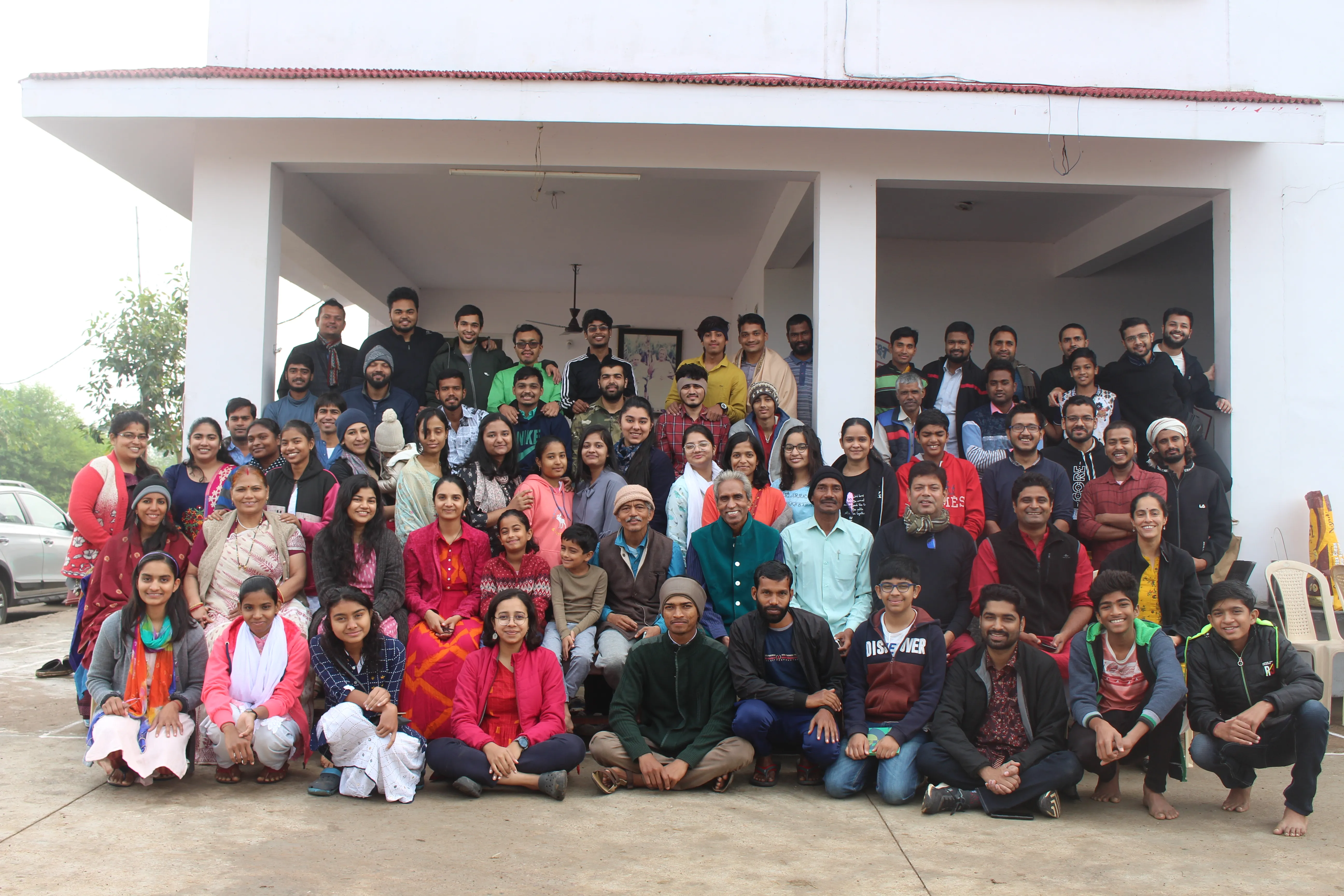
A major part of Manav Teerth is its three-year residential youth programme for individuals between the ages of 18 and 30.

Education and Sanskar
A Living Centre for Education, Conscious Living and Sustainable Community Development
Location
Bemetara, Chhattisgarh
Domain
Education and Sanskar
Project Lead
Ankit Pogula
Primary Focus
Youth development, school education and sustainable community living
About the Project
The initiative is based on the understanding that education should help human beings develop clarity about themselves, their relationships, their role in society and their participation in nature. Academic learning remains important, but it is placed within a wider framework of human development.

The campus creates opportunities for students and young adults to engage with questions related to happiness, prosperity, responsibility, justice, work, family and coexistence.
Rather than separating education from daily life, Manav Teerth connects learning with practical participation. Students live together, contribute to campus responsibilities, engage with agriculture and animal care, and observe how a community can organise itself around cooperation and mutual fulfilment.
The long-term aspiration is to develop individuals who are capable, responsible and clear about how they wish to participate in family, society and the wider natural order.
Core Work

Youth Development
A major part of Manav Teerth is its three-year residential youth programme for individuals between the ages of 18 and 30.

School Education
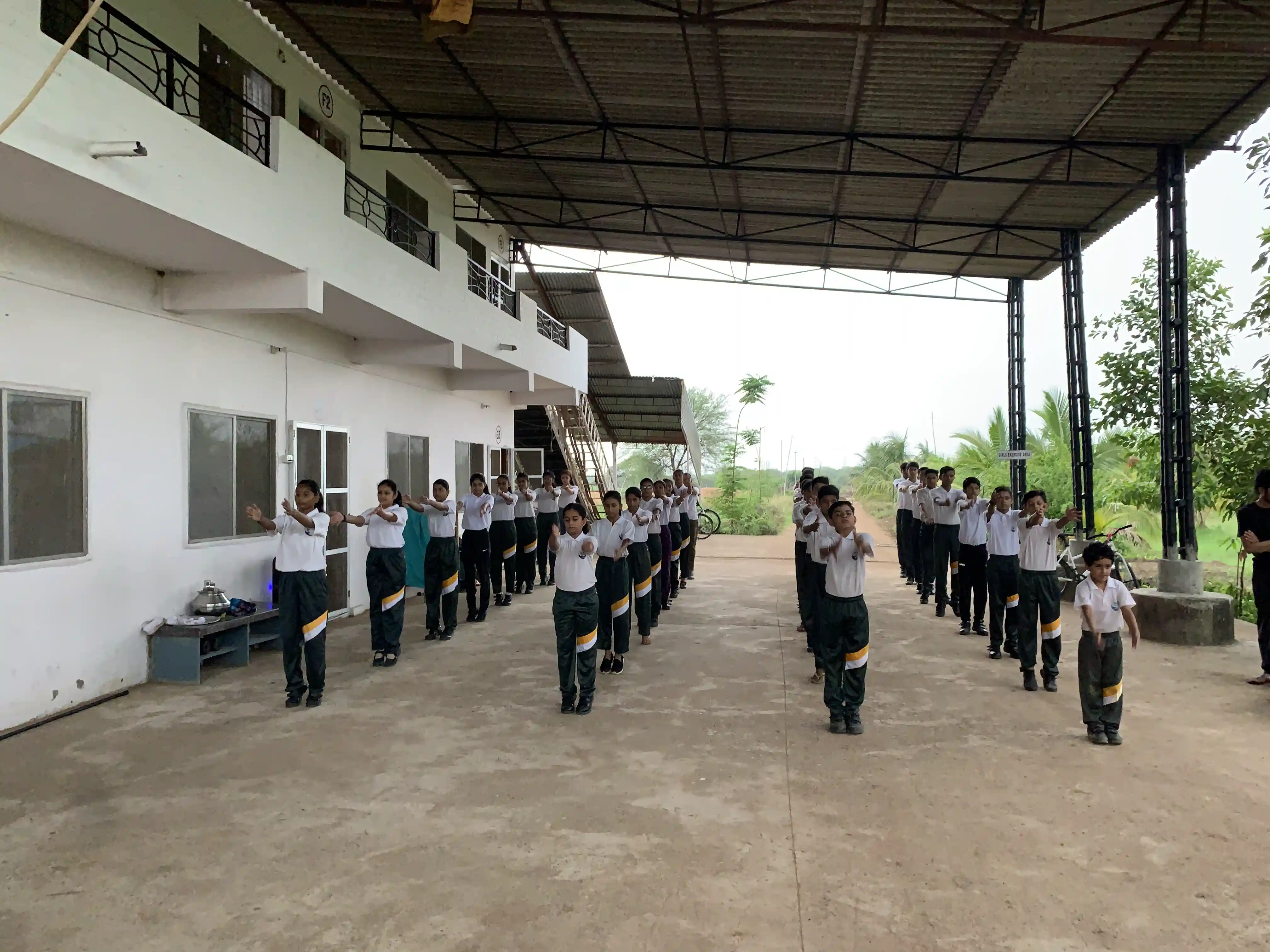
Prerna Vidyalay is the school component of Manav Teerth. The school follows a CBSE-patterned academic framework while also incorporating Jeevan Vidya–Sah-Astitva, values and personality development into the educational environment.

Living Campus
Manav Teerth is not designed only as an institution. It functions as a living campus. The daily environment becomes part of the educational process. Students and residents are able to participate in activities that connect understanding with action.
Impact
Manav Teerth currently accommodates more than 300 students through its school, youth programme and wider campus activities.
The project’s deeper impact lies in its effort to humanise education. Rather than measuring success only through examination results, Manav Teerth also looks at responsibility, participation, relationships and the learner’s ability to live with greater clarity.
300+
students engaged in the campus ecosystem
15
young people targeted for preparation each year
₹20-25 lakh
annual support associated with SHAPE Foundation
₹3-4 crore
estimated wider campus development cost

SHAPE Support
SHAPE Foundation supports Manav Teerth through financial assistance for infrastructure, programme development and operational needs.
The total cost of the wider building and campus development has been estimated at approximately ₹3 crore to ₹4 crore.
Annual support associated with SHAPE Foundation has ranged between ₹20 lakh and ₹25 lakh, with funding used for construction, programme development and campus operations. SHAPE Foundation has supported important infrastructure priorities, including the development of a new kitchen block.
The partnership reflects SHAPE Foundation’s commitment to education that supports human understanding, responsible living and long-term social transformation.
Future Development
Manav Teerth is continuing to develop its physical and educational infrastructure. Planned and ongoing priorities will allow the project to serve more students and create a stronger learning environment.
The future objective is not simply to expand in size. It is to deepen the quality of education and demonstrate how human-centred learning can be combined with sustainable community life.
A new kitchen block supported by SHAPE Foundation
Separate dining facilities for boys and girls
A dedicated media room
A multipurpose activity room
Completion of the new boys' hostel
Expansion of the three-year youth programme

Much of contemporary education focuses on academic success, career preparation and economic advancement. These goals are valuable, but they may not fully address the deeper questions young people face.
Students often complete formal education without clarity about relationships, responsibility, emotional wellbeing or the purpose of work. They may be professionally capable but uncertain about how to live with balance and fulfilment.
Manav Teerth seeks to respond to this gap. The project recognises that education should support both competence and understanding. A learner should be able to develop practical skills while also gaining clarity about human values, family relationships and responsible participation.
What is the purpose of human life?
What is the relationship between happiness and physical facilities?
How can trust and respect be developed in relationships?
What is the role of work in human wellbeing?
How can communities become more self-reliant?
What does responsible participation in nature look like?
How can education contribute to an undivided society?
A major part of Manav Teerth is its three-year residential youth programme for individuals between the ages of 18 and 30.
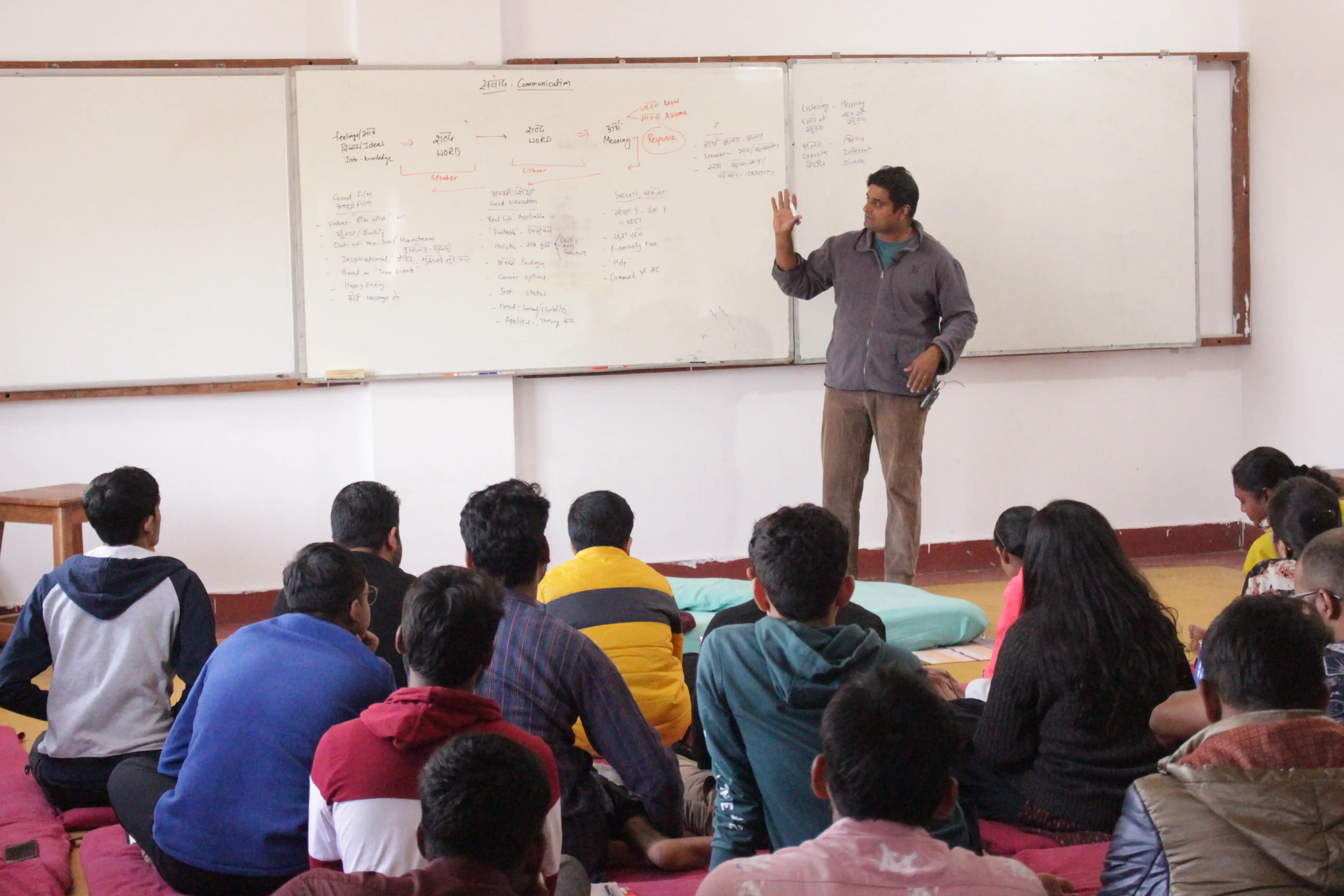
The programme is designed to help young people develop clarity, responsibility and the capacity to participate meaningfully in society. Participants study Jeevan Vidya–Sah-Astitva while also taking part in practical campus activities. This combination allows them to connect understanding with conduct.
The target is to prepare approximately 15 young people each year, with the longer-term ambition of expanding the programme to accommodate around 100 students. The aim is to support young adults who can contribute constructively to education, agriculture, social initiatives, and community life.
Self-exploration and human aspirations
Harmony within the self
Relationships in family and society
Responsible work and production
Community participation
Education and social responsibility
Sustainable living
Care for nature and animals
Leadership rooted in cooperation
Prerna Vidyalay is the school component of Manav Teerth. The school follows a CBSE-patterned academic framework while also incorporating Jeevan Vidya–Sah-Astitva, values and personality development into the educational environment.
The school seeks to create a balance between academic learning and human development. Students are encouraged to develop intellectual capability without losing sight of relationships, responsibility and cooperation.
The presence of Prerna Vidyalay within a larger residential campus gives students access to a broader learning environment where they can observe farming, animal care, resource management and shared responsibility as part of everyday life.
This makes education more connected with reality and helps students understand that knowledge has meaning when it is applied responsibly.
Formal academic learning
Value-based education
Personality development
Participatory learning
Relationship-centred guidance
Practical engagement with campus life
Environmental awareness
Community responsibility
Manav Teerth is not designed only as an institution. It functions as a living campus. The daily environment becomes part of the educational process. Students and residents are able to participate in activities that connect understanding with action.
The campus grows part of its own food and maintains a Gaushala for milk and animal care. It also uses solar energy and water-cycling systems. These practices help students understand the relationship between consumption, production and responsibility.
Sustainability is therefore not taught only as an environmental subject. It is experienced as part of daily living.
Agriculture and food production
Care of the Gaushala
Campus maintenance
Shared community responsibilities
Water management
Use of solar energy
Waste-conscious practices
Participation in collective activities
Manav Teerth aims to demonstrate how education, livelihood, relationships and ecology can be connected.
The campus’s sustainable practices are rooted in the idea that human beings should use physical resources responsibly while ensuring mutual prosperity.
Local Food Production: The campus grows food for its residents, reducing dependence on distant systems and helping learners understand agriculture.
Gaushala and Animal Care: The Gaushala supports milk production while creating opportunities to learn about animal care and responsible participation.
Solar Energy: Solar energy contributes to the campus’s effort to use renewable resources.
Water Cycling: Water-management systems help reduce waste and make resource use more responsible.
Shared Responsibility: Residents participate in daily activities, making work part of learning rather than treating it as separate from education.
Manav Teerth currently accommodates more than 300 students through its school, youth programme and wider campus activities.
The project’s deeper impact lies in its effort to humanise education. Rather than measuring success only through examination results, Manav Teerth also looks at responsibility, participation, relationships and the learner’s ability to live with greater clarity.
More than 300 students engaged in the campus ecosystem
A three-year residential youth-development programme
Prerna Vidyalay operating within a value-based educational environment
Food production and Gaushala activities integrated with learning
Use of solar energy and water-cycling systems
Continued development of educational and residential infrastructure
Growing partnerships with educational institutions
Increased opportunities for young people to study Jeevan Vidya–Sah-Astitva
SHAPE Foundation supports Manav Teerth through financial assistance for infrastructure, programme development and operational needs.
The total cost of the wider building and campus development has been estimated at approximately ₹3 crore to ₹4 crore.
Annual support associated with SHAPE Foundation has ranged between ₹20 lakh and ₹25 lakh, with funding used for construction, programme development and campus operations. SHAPE Foundation has supported important infrastructure priorities, including the development of a new kitchen block.
The partnership reflects SHAPE Foundation’s commitment to education that supports human understanding, responsible living and long-term social transformation.
Campus construction & new kitchen block
Residential infrastructure development
Educational facilities & school classrooms
Programme development for values & consciousness
Operational continuity and community support
Expansion of youth-learning and scholarship opportunities
Strengthening the project's sustainability & farming models
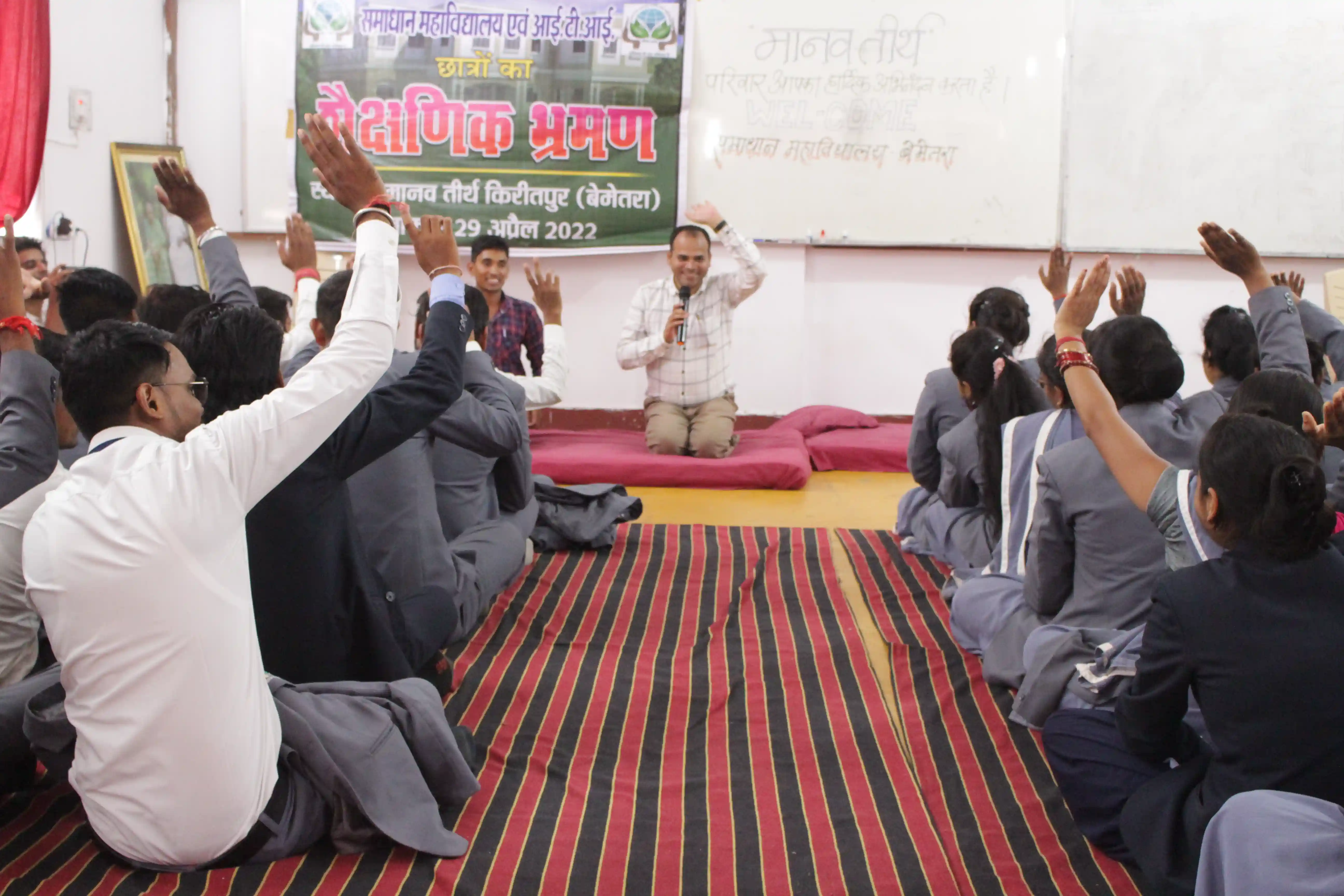
Manav Teerth has developed partnerships with educational and government-linked institutions to support teacher development, educational dialogue and wider institutional engagement.
Partnerships are important because they allow the learning developed at Manav Teerth to reach beyond the campus.
DIET Delhi
Government of Delhi
DIET Bemetara
Samadhan College
Manav Teerth seeks to become a model that other institutions and communities can learn from. The project suggests that education can prepare individuals not only for careers but also for a more harmonious way of living.
By documenting its methods, strengthening its programmes and developing partnerships, Manav Teerth can contribute to wider conversations around the humanisation of education.
Academic education & CBSE Prerna Vidyalay
Jeevan Vidya–Sah-Astitva consciousness study
Three-year residential youth development
Family and community participation
Sustainable agriculture and local food production
Gaushala animal care and integration
Renewable energy (solar) and water cycling
Responsible resource use and waste consciousness
Shared work and cooperative community life
FAQ
Contact Us
For information about programmes, partnerships, or project support, contact SHAPE Foundation.
Phone: +91 75064 33814
Email: info@shape.earth
Support Our Campus
Help fund building construction, dining facilities, the youth programme, and learning resources to model a holistic, conscious, and sustainable way of living.