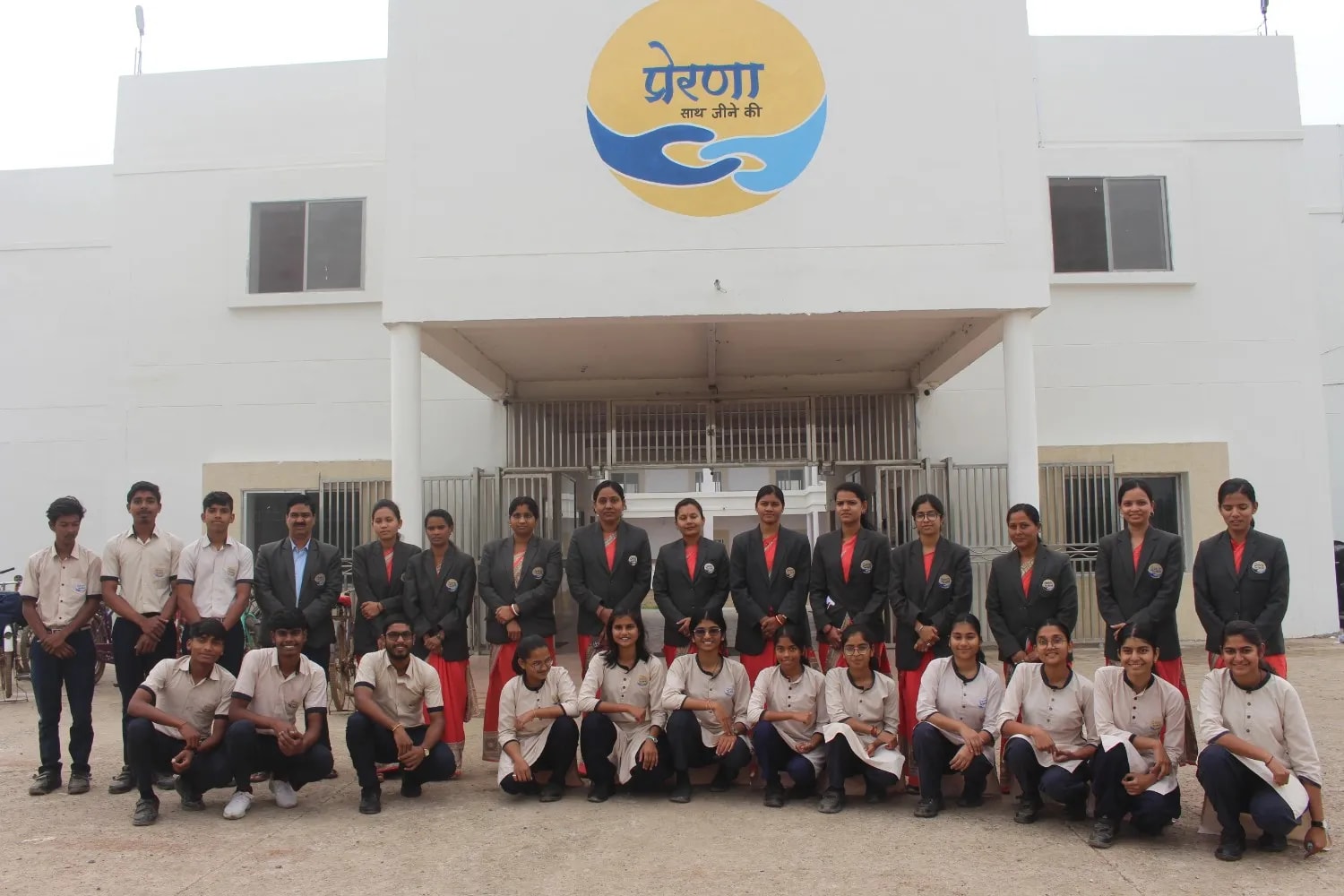
Academic study, value education, relationships and campus work sit in one school day.
Prerana Vidyalaya is the school on the Manav Teerth campus in Bemetara. Children learn in class and also through people, nature and shared work on campus.
The purpose is academic ability together with responsible, self-reliant and humane conduct. The school follows a CBSE-oriented pattern, with space for personality development and practical learning.
Manav Teerth is a centre for Jeevan Vidya–Sah-Astitva. The wider campus holds school, a three-year youth programme, family participation, agriculture, a gaushala, solar energy and water cycling. More than 300 students take part across educational and residential activities.
Value education is not a separate moral-science period. It shows in classroom relationships, teacher conduct, collective work, dialogue and the culture of the campus.
Our work
How the school works
Approach, subjects, campus and participation, each with its own picture.
01 / Educational approach
Why this way of schooling
A child needs knowledge and skill.
Information and exams do not answer every question that comes with growing up.
The school brings those questions into the ordinary day.
Understand themselves
Recognise and fulfil relationships
Communicate with trust and respect
Make responsible choices
Work together and care for the campus
02 / Academic study
Subjects with a larger purpose
Language, mathematics, science and social studies stay central.
Teachers connect them with observation, application and daily life, so subjects build clarity and capability rather than lists to memorise.
Language: thought with clarity, respectful speech
Mathematics: accuracy, precision and logic
Science: visible processes and harmony in nature
Social studies: family, community, history and participation
03 / Living campus
Learning inside Manav Teerth
The school sits inside a working campus: food growing, a gaushala, solar energy and water cycling.
Children can see how facilities are produced, how resources are used, and how people share responsibility.
Physical work sits beside intellectual study.
Agriculture and food
Gaushala and animal care
Solar energy and water cycling
Respect for physical labour
04 / Practical learning
Education through participation
Age-appropriate work includes common spaces, group tasks, plants and animals, and cultural or community events.
This does not replace academic study.
Thought, skill and work are meant to support one another.
Cooperation, discipline and planning
Practical skill and care for shared things
Respect for different kinds of work
Confidence in contributing to a group
Swipe to see more of the work.
01
Educational approach
Why this way of schooling
A child needs knowledge and skill. Information and exams do not answer every question that comes with growing up. The school brings those questions into the ordinary day.
Understand themselves
Recognise and fulfil relationships
Communicate with trust and respect
Make responsible choices
Work together and care for the campus
02
Academic study
Subjects with a larger purpose
Language, mathematics, science and social studies stay central. Teachers connect them with observation, application and daily life, so subjects build clarity and capability rather than lists to memorise.
Language: thought with clarity, respectful speech
Mathematics: accuracy, precision and logic
Science: visible processes and harmony in nature
Social studies: family, community, history and participation
03
Living campus
Learning inside Manav Teerth
The school sits inside a working campus: food growing, a gaushala, solar energy and water cycling. Children can see how facilities are produced, how resources are used, and how people share responsibility. Physical work sits beside intellectual study.
Agriculture and food
Gaushala and animal care
Solar energy and water cycling
Respect for physical labour
04
Practical learning
Education through participation
Age-appropriate work includes common spaces, group tasks, plants and animals, and cultural or community events. This does not replace academic study. Thought, skill and work are meant to support one another.
Cooperation, discipline and planning
Practical skill and care for shared things
Respect for different kinds of work
Confidence in contributing to a group
How learning is held
Dimensions, subjects and participation
Core dimensions
Understand themselves
Fulfil relationships
Communicate with trust
Make responsible choices
Work collaboratively
Care for body and place
Take part in family and society
Academic subjects
Language
Mathematics
Science
Social studies
Connected with observation and daily life
From real work
Cooperation
Discipline
Planning
Practical skill
Stewardship
Respect for labour
Confidence in a group
The quality of relationships shapes whether a child can learn. Students should be able to speak without fear, ask questions and receive guidance with dignity. Teachers are subject instructors and also adults whose listening and conduct are part of the education. Trust, respect, affection, care and guidance are practised in relationships, not only named.
Impact
What the campus holds with the school
School, youth programme and campus life sit together at Manav Teerth.
300+
Students across campus activities
CBSE
Oriented academic pattern
3 years
Youth programme on the same campus
Campus
Gaushala, solar and water cycling
Next
Classrooms, kitchen and a documented school model
SHAPE supports Manav Teerth’s campus: a new kitchen block, separate dining, a media room, a multipurpose space, more residential rooms and stronger classrooms.
The school also needs continued teacher preparation, parent participation, arts and sports space, resources in local languages, and a written record of classroom and campus practice. Admission and residential arrangements should be confirmed with the institution.
Kitchen, dining and media room
Classrooms and residential rooms
Teacher preparation and parent participation
Local-language resources and documentation
Value education is not an occasional lecture. It is the culture of the classroom, the work and the campus.
FAQ
Frequently asked questions
On the Manav Teerth campus in Bemetara, Chhattisgarh.
CBSE-oriented academics with value education, practical participation, relationships and connection with nature. The wider campus is shaped by Madhyasth Darshan and Jeevan Vidya–Sah-Astitva.
It sits inside a residential educational campus. Current admission and residential arrangements should be confirmed with the institution.
SHAPE supports Manav Teerth campus development: kitchen, dining, media room, residential rooms and classrooms.
Ankit Pogula. For visits or admissions, write to Manav Teerth or SHAPE Foundation.
Contact
Connect with the school
For admissions, visits or educational exchange, write to Manav Teerth or SHAPE Foundation.